Selasa, 28 Februari 2023

New Porsche 911 Speedster to be unveiled later this year – report

Porsche is set to bring back the 911 Speedster, with the covers reportedly due to come off the convertible in November ahead of deliveries starting in 2024.

A new Porsche 911 Speedster will reportedly be revealed later this year before going on sale in 2024.

The last 911 Speedster was revealed in April 2019 as a homage to the original Porsche 356 Speedster from the 1950s, while also farewelling the previous generation of the sports car – known as the 991.2 – before production of the current ‘992’ model started.

According to UK publication Car Magazine, the 992-generation 911 Speedster is due to be unveiled by Porsche at this year’s Los Angeles motor show in late November – which is slated to see the car maker put the best parts of the 911 GT3 track special into a convertible body.

In the past, the 911 Speedster has been powered by the flat six-cylinder engine from the Porsche 911 GT3 – the most recent version of which develops up to 375kW and 470Nm without turbochargers or electrical assistance.

Car reports the upcoming Porsche 911 Speedster will feature a steeper windscreen than the standard 911 convertible, lowered bucket seats, aerodynamic domes behind the seats, extra luggage space and a power-operated soft top.

Further details on the 2024 Porsche 911 Speedster are expected to be revealed closer to its unveiling later this year, including whether it comes to Australia.

When the previous-generation 911 Speedster came to Australian showrooms in 2019, it carried a price tag of $604,800 plus on-road costs – making it the second-most expensive Porsche sold locally to date behind the 991.2-generation GT2 RS, priced from $645,400 in 2017.

It’s unclear if the new 911 Speedster will be based on the current, pre-facelift ‘992.1’ 911 – or a variant of the upcoming, facelifted ‘992.2’ model, which is due for unveiling this year.

However, given the timing of the unveiling – and that the previous 911 Speedster was a farewell to that iteration (991.2) of the 911 – the former appears probable.

The post New Porsche 911 Speedster to be unveiled later this year – report appeared first on Drive.

Renault Trafic delays up to six months amid urgent push for June deliveries

The waiting times for a new Renault Trafic van stretch up to six months, however the Australian distributor is working with the factory to beat the June 30 financial-year deadline.

Customers in the queue for a Renault Trafic van face wait times of up to six months – amid stock shortages and production slowdowns affecting most of the car industry.

However, the Australian distributor of Renault vans says it is working overtime with the French factory to get a large allocation of vehicles to clear backorders before the end of the financial year.

The lead-up to June 30 is historically the strongest sales month for utes and vans as businesses big and small refresh their fleets for tax reasons.

While Renault Australia says there are pockets of Trafic vans available at some dealers in certain configurations, long wait times remain for crew versions, and the regular models with a ‘barn door’ tailgate.

“Every Renault Trafic van in the country is spoken for, everything is allocated out,” the boss of Renault Australia, Glen Sealey, told a recent media briefing.

“You could get lucky and find one of a handful of vehicles if you rang around, but the reality is our most popular variants do have wait times of up to six months.

“That said, we are working very hard with the factory to bring those wait times down, clear as many backorders as we can and get customers into their vehicles before June 30.

“We’re waiting (to hear back from the factory) on production now. If we get what we think we’re going to get, we think we’ll be able to deliver most cars by the end of June.”

Sales of the Renault Trafic dipped 31 per cent in Australia last year in an overall new-car market that grew by 3.0 per cent.

However, the distributor of Renault vehicles in Australia said severe stock shortages and shipping bottlenecks slowed deliveries – and that the company has a “healthy” order bank.

The post Renault Trafic delays up to six months amid urgent push for June deliveries appeared first on Drive.

Senin, 27 Februari 2023

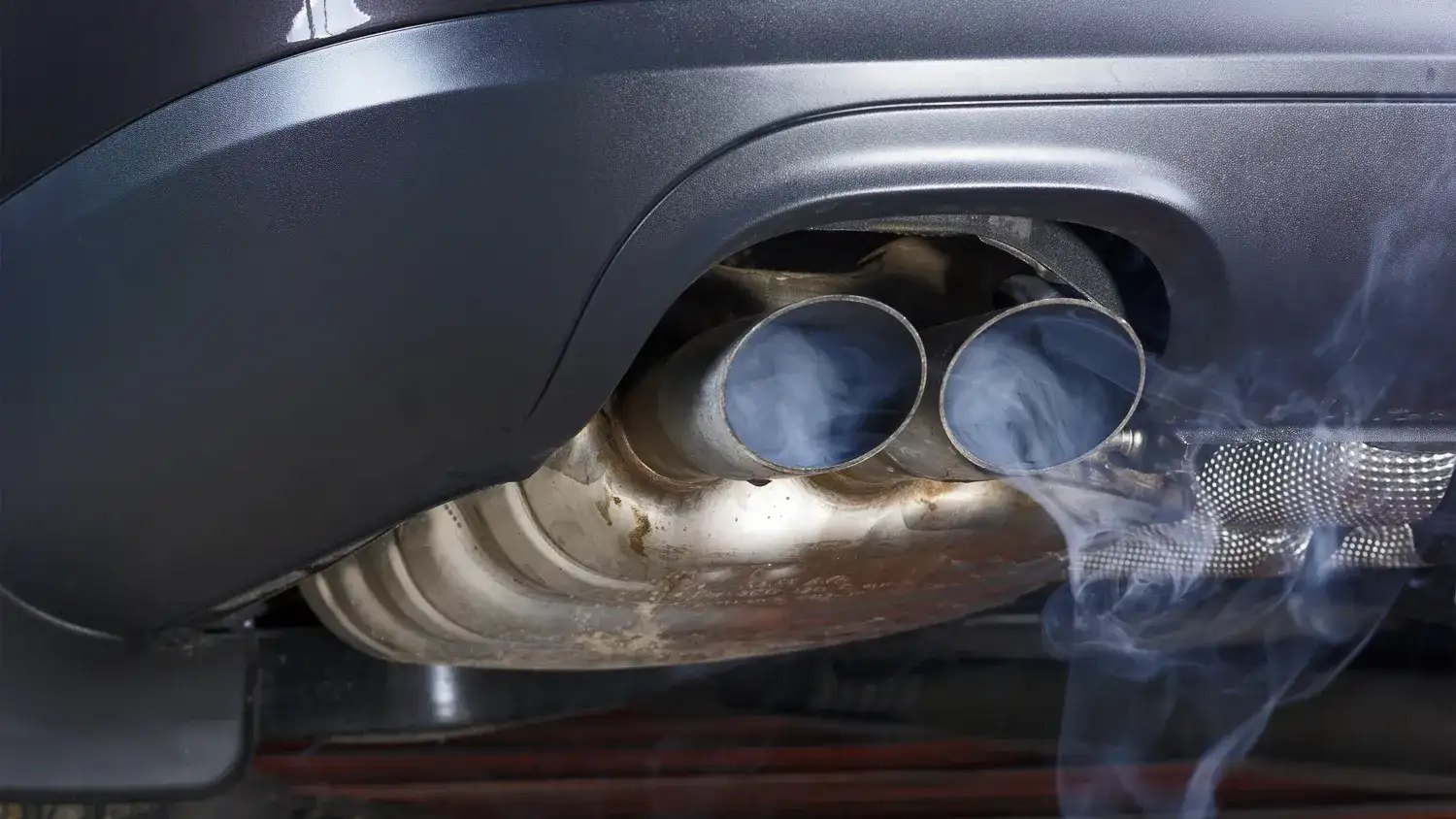
Vehicle emissions kill ten times more Australians than the road toll, research claims

Deaths related to tailpipe gases could be far higher than previously estimated, with Australia’s emissions standards lagging far behind the developed world.

Tailpipe pollution contributes to the premature death of 11,105 Australians every year, according to new research.

The modelling from the University of Melbourne claims vehicle emissions in Australia are also to blame for more than 12,000 hospitalisations annually due to cardiovascular issues, along with almost 7000 respiratory hospitalisations per year.

The research also claims motor vehicle pollution is directly responsible for 66,000 active asthma cases annually.

The findings are based on an overseas study conducted by Environmental Health Intelligence New Zealand, which was scaled up to account for Australia’s larger population.

The claimed 11,105 deaths from vehicle emissions is almost ten times higher than Australia’s annual road toll, which took 1187 lives in 2022 according to the Bureau of Infrastructure and Transport Research Economics.

MORE: Australian road toll hits five-year high – why speed cameras aren’t saving lives

“Like smoking, vehicle emissions contribute to childhood asthma and recurrent lung infections. Adults are at higher risk of premature deaths, stroke, diabetes, heart, and lung disease from exposure to vehicle emissions. Air pollution is another risk factor for poor health,” Dr Vicki Kotsirilos, Melbourne-based GP and Doctors for the Environment Australia spokesperson said in a media statement following the report’s release.

“I routinely assess patients on how much air pollution they are exposed to when they present with heart or lung problems such as asthma or recurrent respiratory infections,” she said.

“Children are particularly at higher risk of being harmed by traffic pollution from idling cars – at schools, shopping centres, and childcare centres – and how close they live to a busy road.”

While the latest study factored in fine particulate matter (PM2.5) and nitrogen dioxide (NO2), previous estimates cited around 2000 deaths in Australia annually from vehicle pollution – but did not factor in harmful NO2 emissions.

Despite scaling up the findings for Australia’s population, the reality could actually be much worse in some inner city areas.

New Zealand’s most densely populated city is Auckland, with 2373 people per square kilometre, while the greatest population density in Australia belongs to Melbourne’s inner north, with 31,100 people per square kilometre.

MORE: Auto industry pushes back on strict European emissions laws

The European Union is set to introduce ‘Euro 7’ emission standards from mid-2025, which includes a blanket limit on nitrogen oxides (NOx) and particulate matter emitted from cars – including fine particulates from tyres and brakes.

Australia currently only enforces ‘Euro 5’ emission standards for passenger cars and light commercial vehicles (such as utes and vans), first introduced in Europe in 2009.

In June 2022, the Federal Chamber of Automotive Industries (FCAI) – the peak body representing all major car companies locally – renewed calls for the Australian Government to introduce stricter emissions targets for new cars.

The post Vehicle emissions kill ten times more Australians than the road toll, research claims appeared first on Drive.

Poll: Angry driver rams neighbour’s car – should you ever touch another person’s car?

Has your neighbour ever parked their car outside your house? This woman in the US has taken her retaliation to the extreme.

Footage of an angry driver pushing their neighbour’s car down the street – after it was parked in front of the “wrong” house – has gone viral on social media platform TikTok.

A string of videos uploaded by TikTok user Joewella DeVille detail the act and aftermath of her unoccupied Toyota RAV4 SUV being pushed down her street in the US state of New York – after it is parked in front of an angry neighbour’s house.

In a follow-up video, the neighbour claims she has complained about DeVille’s car being parked outside her house “three times” – and that she “doesn’t want the car in front of her house.”

However, the social media user and videographer argues there are no restrictions on parking on their street – 24 hours a day and seven days a week – and calls her neighbour “insane”.

According to subsequent videos, the aggressor was charged with a ‘Class E’ offence – which is said to result in a fine of up to $US3000 ($AU44600, or at least a year in jail. The damage to the TikTok user’s Toyota RAV4 is said to amount to $US4500 ($AU6700).

“I have a good sport set up in my house so that I can film the whole thing… hopefully that juicy video of her being arrested will be coming soon,” the TikTok user said in a later video.

While having a stranger’s car (or even a neighbour’s car) parked in front of your house may be frustrating, there’s generally very little you can do about it.

In Australia, if the car is registered and parked legally (within permit restrictions), it can stay there for as long as the owner wants. If a car’s registration has expired, and the vehicle seems abandoned, you can contact your local council to request to have it removed.

If you are suspicious about a parked car, and it doesn’t belong to any neighbours, you can call the local (non-emergency) police station and flag it as a potentially stolen vehicle.

Should you ever take the law into your own hands? We say no, but what are your thoughts?

Let us know in the poll below:

Loading…

The post Poll: Angry driver rams neighbour’s car – should you ever touch another person’s car? appeared first on Drive.

Hybrid Renault Captur and Arkana SUVs years away from Australian showrooms

Demand in Europe for the petrol-electric versions of the Renault Captur city SUV and Renault Arkana small SUV will likely delay their arrival in Australia.

Fuel-efficient hybrid versions of the Renault Captur city SUV and Renault Arkana small SUV could still be years away from local showrooms even though they are already on sale in Europe.

Demand in Europe has pushed waiting times beyond three months for the Renault Captur E-Tech Hybrid and Renault Arkana E-Tech Hybrid – and that has had a knock-on effect for other markets such as Australia.

“We think the hybrid version of the Arkana and the hybrid version of the Captur would be great additions to the Australian showroom line-up, but it will take time,” the boss of Renault Australia Glen Sealey told a recent media briefing.

“Timing will depend on European demand. We’re not expecting it this year. Hopefully, 2024, maybe 2024.

“If you have a look at the financials for Renault, they say every (hybrid) model in Europe today has a three-and-a-half month wait.

“So, for us to get (in-demand) product is highly unlikely until demand eases in Europe or supply ramps up.”

The post Hybrid Renault Captur and Arkana SUVs years away from Australian showrooms appeared first on Drive.

Plug pulled on another solar-powered electric car

The Sono Sion – a solar-powered electric car with a €29,900 ($AU43,600) price – has been axed before the first examples hit European roads.

German start-up Sono Motors has cancelled plans to build the Sion – tipped to become the first mass-produced ‘affordable’ solar-powered electric car – after failing to secure funding for the project.

In July 2022, Sono Motors planned for Sion production to begin in early 2023, priced from €29,900 ($AU43,600) in Europe – approximately €20,000 ($AU29,000) less than an entry-level Tesla Model 3 electric car.

The Sion claimed up to 305km of electric driving range on a charge while the 456 solar half-cells built into its body panels could provide up to 245km of additional range per week.

However, in a media statement late last week, Sono Motors said it had “decided to pivot … to exclusively retrofitting and integrating its solar technology onto third party vehicles, and to terminate its Sion passenger car program,” effective immediately.

“It was a difficult decision and despite more than 45,000 reservations and pre-orders for the Sion, we were compelled to react to the ongoing financial market instability and streamline our business,” Sono Motors CEO Laurin Hahn said in a media statement.

According to Sono Motors, approximately 22,000 reservations for the Sion were made without payment as non-binding pre-orders by its existing business partners.

Sono Motors claims it had already received more than €330 million ($AU518 million) in funding for the Sion project, but its attempts to raise an additional €100 million ($AU157 million) to secure production ultimately fell short.

A third-party production firm in Finland reportedly built 18 Sono Sions before the program was axed, with the decision to not continue the project resulting in more than 300 employees being made redundant.

The Sono Sion’s axing marks the second solar-powered electric car to go out of production – or not make it onto public roads – within a month.

In January 2023, assembly of the Lightyear Zero – the world’s first road-ready solar-powered electric car – was paused after the company’s subsidiary responsible for producing the vehicles, Atlas Technologies, filed for bankruptcy.

Lightyear originally intended to build 946 examples of the €250,000 ($AU382,000) Zero solar car, though only a handful of finished examples rolled off the line before production was paused indefinitely.

While Lightyear previously announced plans to launch a more affordable solar-powered electric car in 2024 or 2025 – named the Lightyear Two – its debut is now in doubt.

The post Plug pulled on another solar-powered electric car appeared first on Drive.

Nissan announces 19 electric cars by 2030, more hybrids in accelerated plans

Less than 18 months after unveiling its electrification roadmap, Nissan has ramped up its electric-car plans, confirming it will launch an additional four zero-emissions cars this decade.

Nissan has announced it will increase the number of “electrified” vehicles in its line-up to 27 by the end of the decade – up from a projected 23 announced in late 2021.

Included in the 27 will be 19 new electric cars from Nissan and its luxury brand Infiniti, as well as eight new hybrid models.

The Japanese car-maker says hybrid and electric cars across the two portfolios are now expected to account for more than 55 per cent of sales globally – up from 50 per cent, originally announced in 2021.

At the time, the company said it was planning 23 electrified vehicles, of which 15 were to be solely battery-powered.

Nissan forecasts 98 per cent of its cars sold in Europe will be electrified in 2026, while it expects 58 per cent of Japanese buyers to opt for hybrid or electric vehicles.

Interestingly, the company has reduced its expectations for the Chinese market, forecasting 35 per cent of sales will be from its electrified range – down from the estimate of 40 per cent given in late 2021.

While Nissan didn’t announce the 27 electrified models by name, unconfirmed reports claim Nissan could have plans for a hybrid Patrol, hybrid and electric Navara utes, a hybrid ‘R36’ GT-R supercar, and even an electric 200SX successor (potentially badged as the Silvia).

In November 2021, Nissan announced it would spend $US18 billion ($AU27 billion) over five years towards its electrification goals.

The post Nissan announces 19 electric cars by 2030, more hybrids in accelerated plans appeared first on Drive.